


Digital concert programme
Quartet in Residence: Opus13
Tuesday 7 July 2026, 7.30pm
The Venue at Leeds Conservatoire
Felix Mendelssohn Quartet No 2, Op 13
Interval of twenty minutes
Kryštof Mařatka AMEDEA visage de jeune fille
Leoš Janáček Quartet No 2 (Intimate Letters)
Thanks to our continuing partnership with Wigmore Hall String Quartet Competition, every three years we bring a new world-class string quartet to Leeds for nine exciting performances. In April 2025 we went to Wigmore Hall for the finals of the competition and selected Opus13 to be our next Quartet in Residence. We welcome you this evening to the third recital of the quartet’s residency and look forward to getting to know them with you over the next three years.
Leeds International Concert Season
We are very much looking forward to starting our residency in Leeds and getting to know the audience at The Venue. Following the fantastic Leonkoro Quartet, we know we have big shoes to fill!
For our first season in Leeds, we’ve put together three programmes consisting of pieces that mean a lot to us and are important parts of our identity. As a quartet, we love performing the great string quartet canon, and we’re equally passionate about bringing Nordic music – both classical and contemporary – to audiences abroad. We begin this evening’s recital by playing the quartet that gave us our name; Mendelssohn’s Opus 13.
Opus13
Felix Mendelssohn (1809-47)
String Quartet in A minor, Op 13
Adagio – Allegro vivace
Adagio non lento
Intermezzo: Allegretto con moto
Presto
From the Quartet in A minor, Op 13 (1827) to the Quartet in F minor, Op 80 (1847), Mendelssohn's quartets span almost his entire creative life. The Quartets Op 12 in E flat major and Op 13 in A minor are numbered 1 and 2 respectively but, confusingly, Op 13 was composed two years before Op 12. Earlier that year Mendelssohn had composed a song entitled Frage (Question), with a three-note melodic figure representing the question. He then adopted the same motto-theme for the Quartet Op 13. Of this motto-theme, first heard in the introduction, Mendelssohn wrote:
You will hear its notes resound in the first and last movements and sense its feeling in all four.
Mendelssohn's introduction in A major includes, at the first crescendo to forte, the initial statement of the motto-theme, a simple rising figure in dotted rhythm. An E-F oscillation on the viola crescendos into the change of tempo (Allegro vivace) in the new key of A minor. After a passage of agitated semiquavers, the viola plays the first subject, closely imitated by the other instruments. The second subject in E minor, marked con fuoco and introduced by the cello, brings no relief from the passionate yearning which permeates this movement. The development section, heralded by a return to the agitated semiquavers, begins turbulently but eventually relaxes before a big crescendo leads to the recapitulation.
The slow movement in F major maintains the prevailing earnestness and includes an expressive fugato passage begun by the viola and reminiscent of a similar passage in the parallel movement from Beethoven's Quartet Op 95. Following the intense development in the middle section (poco più animato) the return of the opening restores calm.
In the Intermezzo Mendelssohn introduces a lighter mood, especially in the faster middle section – the type of elfin scherzo which he perfected. After the return of the opening material, an acceleration, then hints of the elfin music, the movement ends with delicate pizzicato.
The finale starts explosively with a dramatic tremolando to which the first violin adds an intense passage of fortissimo recitative. Eventually, after much instability, A minor is reached and Mendelssohn introduces a profusion of new ideas while also recalling material from earlier movements. Near the end the first violin again returns to the slow movement's fugato theme, before another passage of recitative leads to a final recall of the beginning of the work. This quartet is remarkably original, serious and deeply emotional for a youth of eighteen.
Kryštof Mařatka (born 1972)
AMEDEA visage de jeune fille
Born in Prague, Mařatka studied piano and chamber music, before completing a course on computer music at IRCAM in 1999. The diverse sources from which he draws inspiration are the traditional music of the world's numerous regions, the birth of Man's language, and the music and art of the Palaeolithic era. Mařatka has also established careers as a conductor and a pianist.
During an exhibition of the artist Modigliani (1884-1920) the composer was fascinated by all of his work but especially the painting Visage de jeune fille. He realised that Modigliani had drawn upon principles similar to those guiding his own work - universal archaic techniques and contemporary processes. AMEDEA was commissioned for a 2025 competition: Quartets in Bordeaux, being the set work for the competition final. Just as in music the string quartet is the most intimate medium, so Modigliani represents intimacy through the human figure, in this case a woman's face. In common with such works as Berg's Lyric Suite and Janáček's two quartets, Mařatka's piece is inspired by the eternal sources of love, women, and passion.
Leoš Janáček (1854-1928)
String Quartet No 2 (Intimate Letters)
Andante
Adagio
Moderato
Allegro
Most of Janáček’s greatest works date from his last twelve years, a period of phenomenal creative outpouring inspired by his passion – unreciprocated - for Kamila Stösslová, a married woman thirty-eight years his junior, to whom he wrote hundreds of letters. He composed the second of his two quartets in about three weeks in January/February 1928, not long before his death. The title Intimate Letters reflects the passionate character of his outpourings to Kamila. This highly original quartet, one of the greatest of the twentieth century, is a work of typical intensity and immediacy. Its vivid emotional honesty is unique in the quartet repertoire. The first movement conveys, in the composer's words, “my impression of when I saw you for the first time”. Its passionate opening bars give way to the viola playing sul ponticello (near the bridge, producing a glassy sound) – a statement and answer which is repeated at a different pitch, the cello now playing the sul ponticello phrase. Throughout this movement the tempo and mood fluctuate restlessly in a succession of episodes (often described as montage technique), rather than strictly adhering to classical sonata form.
The second movement, which is predominantly derived from the viola's opening theme, is intended to evoke a summer spent with Kamila at the town of Luhačovice Spa. Musically this movement is nearly all derived from the viola melody at the very beginning, but as in the first movement, there are many changes of tempo from extremely slow to extremely fast. Late in this movement Janáček also briefly recalls the theme from the opening of the work.
The third movement begins with a melody in the rocking rhythm of a barcarolle. There are many short episodes in different tempos, but the basic rhythmic unit (long-short) is present in nearly all of them, either in the melody or in the accompaniment. In rondo form, the finale again has many episodes of disorientating character, with volatile mood-swings, so that each return of the opening – in style of a folk-dance – is especially welcome. It has been suggested that the viola, which has an important role throughout the quartet, is a personification of Kamila herself.
© Philip Borg-Wheeler
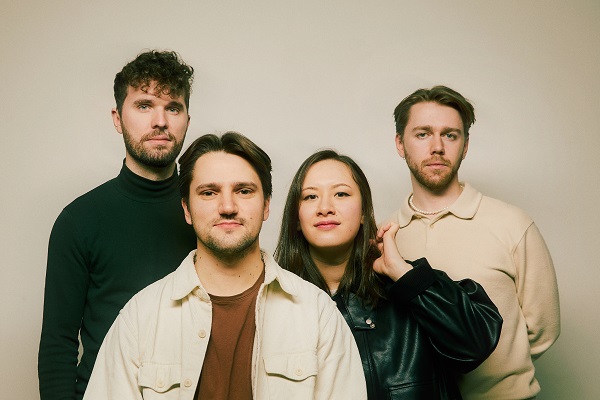
Opus13
Sonoko Miriam Welde – violin
Edvard Erdal – violin
Albin Uusijärvi – viola
Daniel Thorell – cello
“This was a performance of a profundity and kaleidoscopic colour that would have been astounding from any ensemble, let alone a young one still making itself known.” (Charlotte Gardner, Gramophone)
First Prize winners at both the 2025 Wigmore Hall International String Quartet Competition and the Bordeaux International String Quartet Competition, Opus13 is rapidly building a reputation on the international chamber music scene.
Named after Mendelssohn’s youthful and passionate A Minor Quartet, Op 13 — the first piece they ever played together —the quartet was formed in Oslo in 2014 by four teenagers eager to dive into the world of string quartets. Opus13 comprises Norwegian violinists Sonoko Miriam Welde and Edvard Erdal, violist Albin Uusijärvi and cellist Daniel Thorell, both from Sweden.
In addition to performing the core string quartet repertoire by composers such as Mozart, Bartók, and Schubert, Opus13 are passionate ambassadors of Nordic classical and contemporary music, frequently programming works by Grieg, Stenhammar, Tarrodi, Byström, and Fagerlund. They also enjoy genre-crossing collaborations, having performed with Norwegian folk and popular music artists including Gjermund Larsen Trio, Sissel Kyrkjebø, and Sver.
Upcoming debuts include performances at Concertgebouw Amsterdam, Wigmore Hall London, Laeiszhalle Hamburg, Essen Philharmonie, Rotterdam De Doelen and Stockholm Konserthus, as well as festival projects at the Baltic Sea, Bergen, Bologna, Cheltenham and Banff Festivals. Opus13 returns to South Korea for a series of performances and make their debut tour of Japan including performances in Osaka, Yokohama and Tokyo.
Opus13 collaborates with leading musicians such as Janine Jansen, Leif-Ove Andsnes, Tabea Zimmermann and Anne Sofie von Otter. Their musical development has been shaped by ongoing mentorships with Bjørg Lewis and Berit Cardas of the Vertavo Quartet and Tim Frederiksen. From 2025 the quartet has also studied with Prof Oliver Wille (Kuss Quartett).
Opus13 are the founders and artistic directors of Vinterspill på Lillehammer, an annual chamber music festival in Lillehammer, Norway.
The quartet performs on an exceptional set of instruments:
- Sonoko Miriam Welde, violin – Antonio Stradivari (1736), on loan from Anders Sveaas’ Charitable Fund
- Edvard Erdal, violin – Giovanni Battista Guadagnini (1751), on loan from Dextra Musica
- Albin Uusijärvi, viola – Christophe Landon (2008)
- Daniel Thorell, cello – Giuseppe & Antonio Gagliano (1772), on loan from the Järnåker Foundation